This is our time. Let’s use it well.
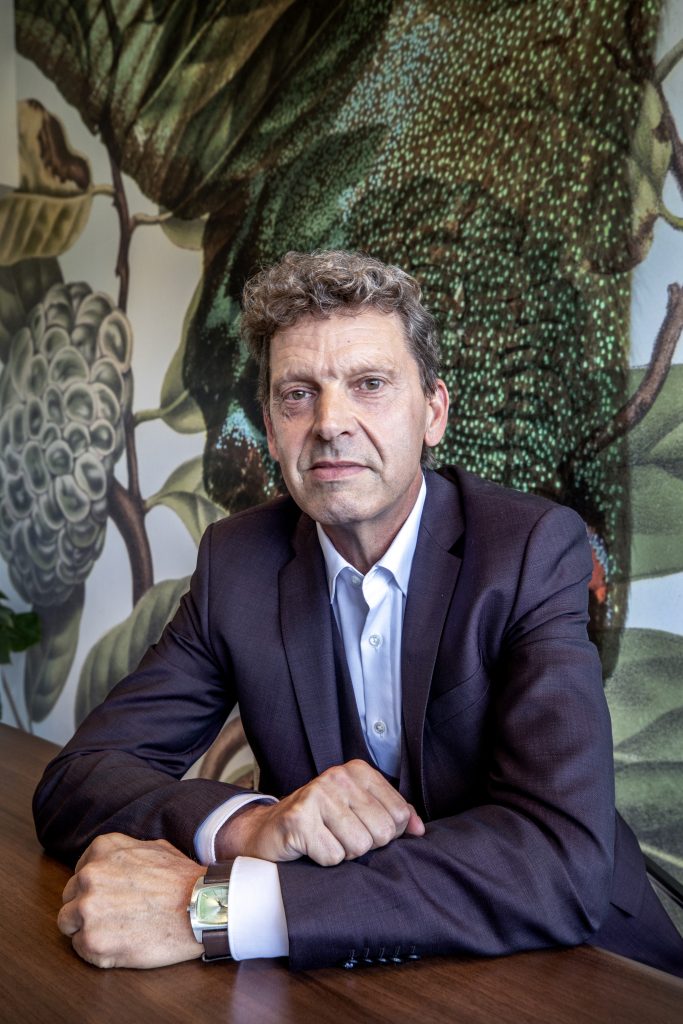
In Conversation with Edwin van Huis
Former Director, Naturalis Biodiversity Center and Principal Advisor to CEO of Picturae
“It is time to collaborate, using the collections our institutions have built up over centuries, and put them to use. Together, we can have an immense impact. Never before have our collections and our data been so important.”
Leipold: For centuries, natural history museums have been the silent sentinels of Earth’s biological heritage. Within their mahogany drawers and glass jars lie millions of specimens – vessels of knowledge that map the history of life. But as we face a biodiversity crisis that, as many scientists predict, will be more devastating than the climate crisis, these collections can no longer remain ‘silent.’ To understand how we are turning these physical archives into a dynamic, global digital knowledge system, we sat down with Edwin van Huis, former Director of Naturalis Biodiversity Center in Leiden, the Netherlands and principal advisor of Picturae.
Leipold: Picturae has been at the forefront of moving millions of specimens from museum drawers to the digital realm. Why is this happening now, and why is it so urgent?
van Huis: We are currently in a race against time. For over 250 years, we have collected millions of natural history specimen and safeguarded them in our institutions. These collections hold and enormous amount of information and knowledge about the natural world. But, much of that knowledge has been ‘locked’ in physical space, only accessible to a small group of specialists. Today, we are in the midst of a biodiversity crisis. To solve it, we need data – massive amounts of it – to understand species distribution, evolution, and extinction risks.
By building a global digital collection, we aren’t just taking digitizing plants and beetles; we are opening up the knowledge held in our institutions about the natural world to every scientist, in every domain.
Leipold: and why is that important? And how do the institutions do that?
van Huis: It is important on so many levels. First of all, for the institution and the scientists and curators that work there. They will already have a network of colleagues they consult and who visit their collections. But when the collections are digitized, and can be seen by all around the world. Suddenly, their network grows enormously. Not only by other colleagues but also by scientists in related fields, for instance for climate studies, or policy makers looking at land distribution, etc. The growth of all these individual networks strengthens the position of the institution. And let’s not forget that every institution holds many collections that they do not have a specialist for. These collections just lay there, literally in the dark, no-one looks at them and hardly anyone knows about them. When they are digitally available, they will be found by outside specialists who will look at them and start using them.
Leipold: and why is it important for society?
van Huis: We are in the midst of a biodiversity crisis. We all know it, we all know something needs to be done, but it is not easy to get the butterflies and the birds back when they have disappeared. The theory of fighting the climate crisis is relatively simple: you have to stop producing CO2. But to get the fish back in the sea, that is another matter. Fighting the biodiversity crisis is rebuilding the ecosystem to make it attractive for animals and plants to return. All species live in intricate interdependent networks; to survive they need an environment with many other species to live and prosper. All the knowledge that we need to tell us what those ecosystems look like, what species you need to build up that environment, all knowledge that we need to repair the damage we have done, is there, in our institutions. We need to get this knowledge out of the institutions and into society. That is the biggest and most generous contribution the natural history institutions can make to fighting the biodiversity crisis.
Leipold: But digitization is expensive
van Huis: Indeed, it is. In Europe alone the natural history museums together hold 1.5 billion objects. At the current prices, we need several billions of Euros to digitize all. That will not happen. The larger and richer institutions can afford to digitize large part of their collections, but for many organizations this is out of reach. But I think that technology will change that. The use of AI, already widely accepted in species recognition apps, can also be used to speed up the digitization process. The human transcription of labels can be done by AI, making it not only cheaper but also more trustworthy. AI cannot only ‘read’ the labels, it can also interpret them. So, for instance, when you digitize a collection of plants, the label is automatically read and indexed. The label tells you the species name, where it was found, when it was found and by whom. This information can be tied to information already out there. Through the AI indexing of the species name, we can find a picture of the flowering plant in the wild and connect these photos it to the digitized image of the dried specimen. We can make a distribution map using the GBIF-data. We can link to the literature that is held in BHL (Biodiversity Heritage Library) or other databases. We can even flag errors, if the label states a geographical position where this species has never been found or the name has been spelled wrong. Etc. Suddenly you can connect the digital specimen to all the information that is already out there on the web, enriching the object and making it so much more useful and valuable, for any kind of use, scientific, educational, for policy of enjoyment, you name it.
Leipold: That is the concept of the extend digital specimen, right? It means that digitization no longer is just a high-resolution photo but creates a digital twin?
van Huis: Absolutely. The digitized object, plant or animal, becomes the center of a web of knowledge attributed to that object or to the species. All knowledge that is already out there can be tied to the object. Institutions often do not have the means to analyze the DNA of their collection. But the genetic code of the species may already be out there, produced by another institute. By tying those data to the specimen, it becomes more valuable for research. A digital twin is a comprehensive data model. The digitization of an object is the start of the creation of a virtual counterpart of the physical specimen that not only has taxonomical data but also genomic data, biochemical data, morphological data, geographical data, species interactions data, ecological data, etc.
Leipold: So, by digitization and the use of AI, you bring the collection dinto the world. And you also make the collection data machine-readable, so the computer can autonomously search for links in other data repositories.
van Huis: Yes, and we are very happy that we also see the development of the infrastructures needed to underpin this connected world of knowledge. DiSSCo Europe is indispensable as offers an infrastructure that brings all digitized collections together and offers the tools to develop the knowledgebase further. And global repositories, like GBIF, BHL, GenBank or iBOL offer essential data that we can connect to the specimen.
Leipold: How do you ensure that the institutions who digitize their collections can still keep track of who is using their data?
van Huis: This is where Digital Object Identifiers (DOIs) come in. Every digital specimen is assigned a unique, permanent DOI. This acts as a ‘digital passport.’ When a chemist looks for a compound in a rare plant ad uses the data provided by the natural history museum that holds that particular specimen, this research is automatically linked by that DOI. When a climate scientist tracks shifting pollination timeframes, they link to the same DOI. This creates a web of interconnected insights where the institution still can follow exactly who is using their collections and for what. That is very valuable information.
Leipold: You said that AI can bring the prices down for digitization, what else can be done to make it more affordable?
van Huis: I expect the next step will be the introduction of precision robots for the digitization of insect collections. The cost of digitization of insects is still mainly determined by the cost of human operators that handle the objects. Picturae has been the first to ‘industrialize’ the digitization process by introducing conveyor belt systems, making it possible to digitize thousands of objects per day and bringing the price of digitization down with a very big step. Now they are working on precision robots that can place the insects on the conveyors for digitization and, afterwards, put them back in their drawers, taking the place of human operators. This may sound like an easy thing to do for a robot, but it is not at all. Insects are very brittle, so every mistake may damage it. Also, for humans it is quite easy to pick up a pinned insect by the pinhead and moving it around. But for a robot it is extremely difficult, every single object requires a unique approach and uniquely applied force. There are no systems in het market today that can do that, so they need to be developed from scratch. I expect it will take another few years before the such a precision robot will be put to practice in a production setting. In the longer term, this development, and the reduction in costs that goes along with it, will bring mass digitization in the reach of lesser funded institutions. And that is essential if we want to speed up the digitization process in the world.
Leipold: What is the ultimate goal for natural history institutions in this ‘digitization revolution’?
van Huis: When institutions do not engage in the digitization of their collections, their collections will lose their relevance. Science is more and more digital and founded on collaboration. Teams work together, looking for data sets online for their research. If you do not have the means to be part of that future, you will miss out. Also, as I have tried to explain, the value of the collections will increase rapidly when the physical object has a digital twin that can connect to all kind of relevant data sets. I believe that by creating a seamless digital link between the physical specimen and the global scientific community, we provide the tools to help science speed up in our institutions, and, at the same time, mitigate the biodiversity crisis. Doing so, the natural history museums aren’t just archiving the past; they are fueling the innovation of tomorrow. Whether it’s discovering new medicines or protecting an endangered ecosystem, the answers are often already in our collections. We’re just making them searchable and connectable for the first time in history. The infrastructure to do so is in place, the technology is there, so let’s do it.
This is our time. Let’s use it well.
Photo credit: Raymond Rutting