2 Million Scans and Counting
A Milestone in Digitizing Italy’s Herbarium Collections
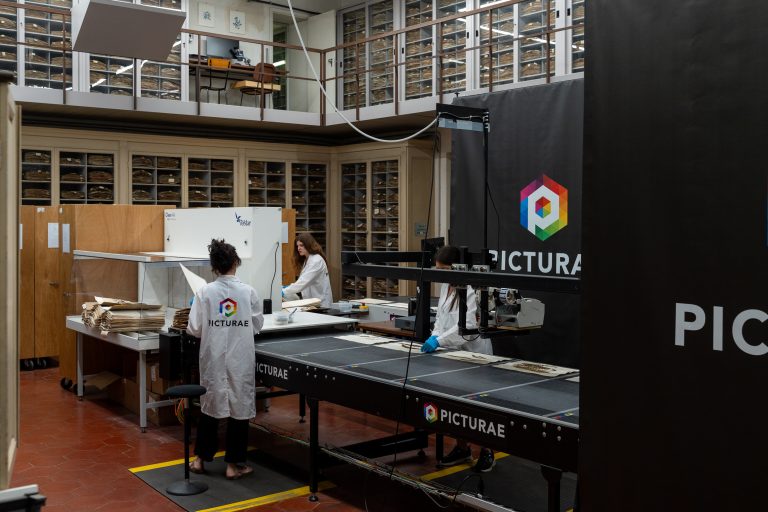
We’re thrilled to share an incredible update from our digitization project with the NBFC – National Biodiversity Future Center in Italy in collaboration with University of Florence and University of Padua. With the dedication of our 12 scan operators producing 12,000 scans per day, we’ve now reached an astounding 2 million digitized herbarium specimens from the University of Florence!
This milestone represents more than just numbers. It’s about unlocking the rich botanical history housed in Italy’s collections and making it accessible to researchers worldwide. As we approach the completion of Florence’s collection, we now begin the next phase of the project: digitizing collections from across Italy starting with the University of Padua.

Hear from the Project Experts
Elena Canadelli, Professor at the University of Padova, scientific coordinator of the NBFC project: “The National Biodiversity Future Center (NBFC) launched an ambitious programme to map and digitise the natural history collections preserved in Italian herbaria and museums. The massive digitisation project going on in Florence and coordinated by the University of Padua makes possible for the first time to enhance Italy’s botanical collections in a broad and coordinated manner. We hope it’s just the beginning of a new trend for Italy’s natural history collections.”
Lorenzo Cecchi, Florence botanical collections Curator: “The digitization project carried out in Florence has been dreamt of for at least seven years and is undoubtedly the most important one ever undertaken in Italy. Thanks to the excellent cooperation between the University of Padua and the University of Florence with Picturae, we are strengthening the network of Italian botanical museums and making a significant contribution to European digitization initiatives.”
Julia Szalewicz, Project Manager Picturae: “This initiative is groundbreaking for biodiversity research, both in Italy and internationally. By uniting and digitizing collections from across the country, we’re opening doors to unprecedented collaboration and discovery in the scientific community. Personally, I am grateful for the inspiring work environment we’ve built—where passionate individuals come together to create something extraordinary and impactful. A huge thank you to our fantastic team and all our partners. Together, we’re shaping the future of biodiversity research!”